Product identity
Product name · series · SKU · descriptions · categories · relationships

Manage furniture products, variants, dimensions, materials, finishes, imagery, documents, translations, and dealer data from one controlled catalog.
A chair is rarely just a name, description, and price. Its sellable record may depend on a series, frame, finish, upholstery, dimensions, packaging, certificates, imagery, and market-specific documents. Utomo keeps those parts structured and connected.
144 possible configurations from one product model
Keep searchable, reusable product facts as structured attributes instead of burying them in descriptions or recreating them for each sales channel.
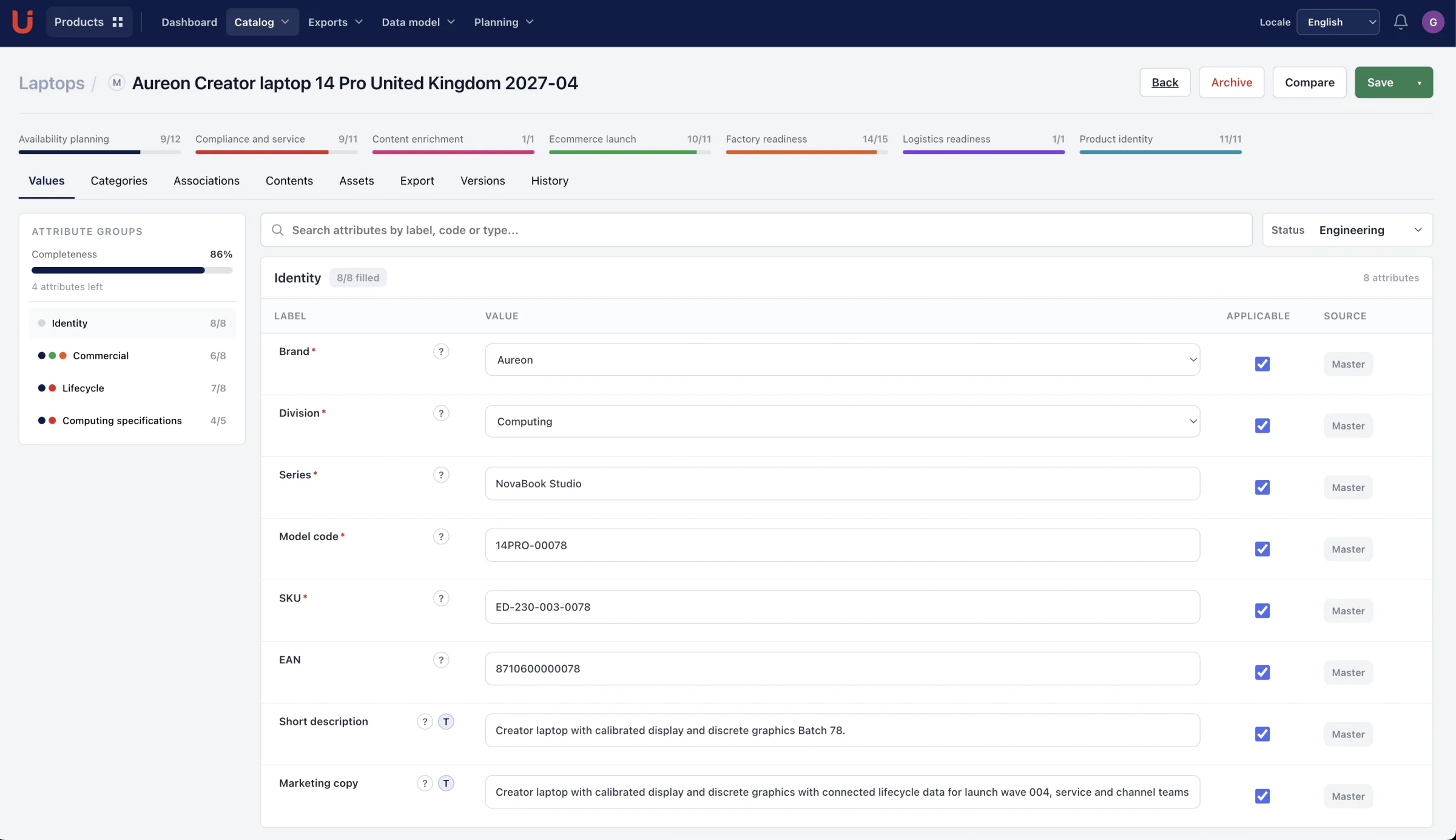
Product name · series · SKU · descriptions · categories · relationships
Width · depth · height · seat dimensions · weight · assembly data · packaging
Materials · finishes · colors · upholstery · care instructions
Certifications · manuals · product sheets · certificates · market requirements
The collection story, core construction, care guidance, and common dimensions can live on the master product. A sellable variant keeps its own SKU, finish, fabric, color, availability, and approved imagery. Teams update shared information once without losing the detail that distinguishes each configuration.
Width, depth, height, seat height, seat depth, arm height, and packaged dimensions should each have a field, value type, and unit. Structured measurements can be validated, compared, filtered, converted, and mapped into retailer templates without parsing a paragraph every time.
A natural-oak frame with sand upholstery should not inherit the packshot for black ash and blue fabric. Utomo keeps variant imagery precise while shared manuals, certificates, CAD files, and care documents remain reusable across the range.
Explore product-linked digital assetsCollections are commercial structures, not just folders. Connect every item in a dining range so websites, dealers, sales teams, and product sheets can reuse the same cross-sell and family context.
Preserve the shared model while local teams control the information that genuinely changes by language, unit system, market, or regulation.
Names, descriptions, instructions, measurements, and supporting documents.
Availability, regulatory information, price context, and approved assortments.
Brand sites, webshops, retailers, dealers, marketplaces, sales teams, catalogs, product sheets, and partner portals.
Spreadsheets remain useful for analysis, handoffs, and controlled imports. As ranges, variants, assets, translations, relationships, and channel rules grow, they are less suited to being the central record everyone edits. Utomo adds validation, ownership, relationships, asset links, and readiness around that work.
Read the PIM and spreadsheet guideImport one representative product family and test its attributes, variants, assets, dimensions, translations, relationships, and dealer output in UTOMO.